
Kalawao County 24-Hour Release Status
Kalawao County, the Department of Health Kalawao Sheriff, and MCCC do not publish an official rolling 24-hour release list. No local feed URL, display fields, refresh schedule, retention span, booking-photo flag, or sheriff jail app was located. MCCC's official page is a facility information page, not a list of people who left custody today. An arrest log, news report, court calendar, or aggregate DCR population report must not be substituted for a release feed.
The lack of a feed changes the method. Start with a specific person's DCR custody or parole status in Hawaiʻi SAVIN. Then ask the reported facility whether its public channel can confirm that the identified custody episode ended. Check the court docket for the legal order, and request a durable record when the live interface cannot answer the question.
Check Kalawao County Releases Today
A same-day inquiry works best when it identifies one person and one custody episode. Searching broadly for “everyone released” will not produce an official Kalawao County list because no agency publishes that product.
- Open VINELink, select Hawaii, and search the full name. Add an offender or case number when available.
- Compare identifiers, the reporting agency, and the exact custody or parole status before treating a result as a match.
- If MCCC is shown or is the likely DCR facility, call its main line at 808-243-5101 and ask for the public release-confirmation route.
- Use Hawaii Judiciary online records to locate the order, disposition, or docket event that supplied legal authority.
- If the event is not clear, file a narrow UIPA request with DCR or the arresting agency for releasable confirmation of the effective date, facility, category, and transfer status.
- If federal or immigration custody is indicated, move to BOP, USMS, or ICE rather than continuing to search the Hawaii DCR route.
For a broader named-person search across custody types, the Kalawao County released inmates guide explains the full path. Keep the system name, search date, identifier, reporting agency, and exact status wording in personal notes so a later check can be compared fairly.
What Kalawao 24-Hour Sources Show
Because no local 24-hour list exists, there is no legitimate feed-field inventory. The useful substitute is a source comparison. Each source controls a different fact, and no single result proves the whole release event.
| Reader's question | Best official channel | What it can establish |
|---|---|---|
| Did DCR report a status change today? | Hawaiʻi SAVIN/VINELink | Reported custody or parole status and available event information |
| Did a judge authorize release? | eCourt Kōkua and the court order | Legal authority, conditions, disposition, or sentence entry |
| Did MCCC complete the departure? | MCCC or a DCR release record | Custodian confirmation and the difference between transfer and community release |
| Did federal custody begin or end? | BOP, USMS, or ICE | Status within the particular federal system |
| Is the event no longer visible? | DCR, DLE, DOH, or other proper UIPA custodian | A durable, releasable record for the identified episode |
Note: A court order proves authorization, while the custodian's record is needed to show that physical release or transfer was completed.
Hawaiʻi SAVIN for Kalawao Releases
Hawaiʻi SAVIN, delivered through VINELink, is DCR's public locate-an-offender and notification route. It covers custody and parole status for people under DCR jurisdiction. That makes it useful after a Kalawao-related detainee enters MCCC or another DCR facility. It does not cover a person merely because a Kalawao officer or National Park Service ranger made contact, and it is not a browsable list of everyone released during a day.
The official Hawaiʻi SAVIN page explains the state service and its registration routes.
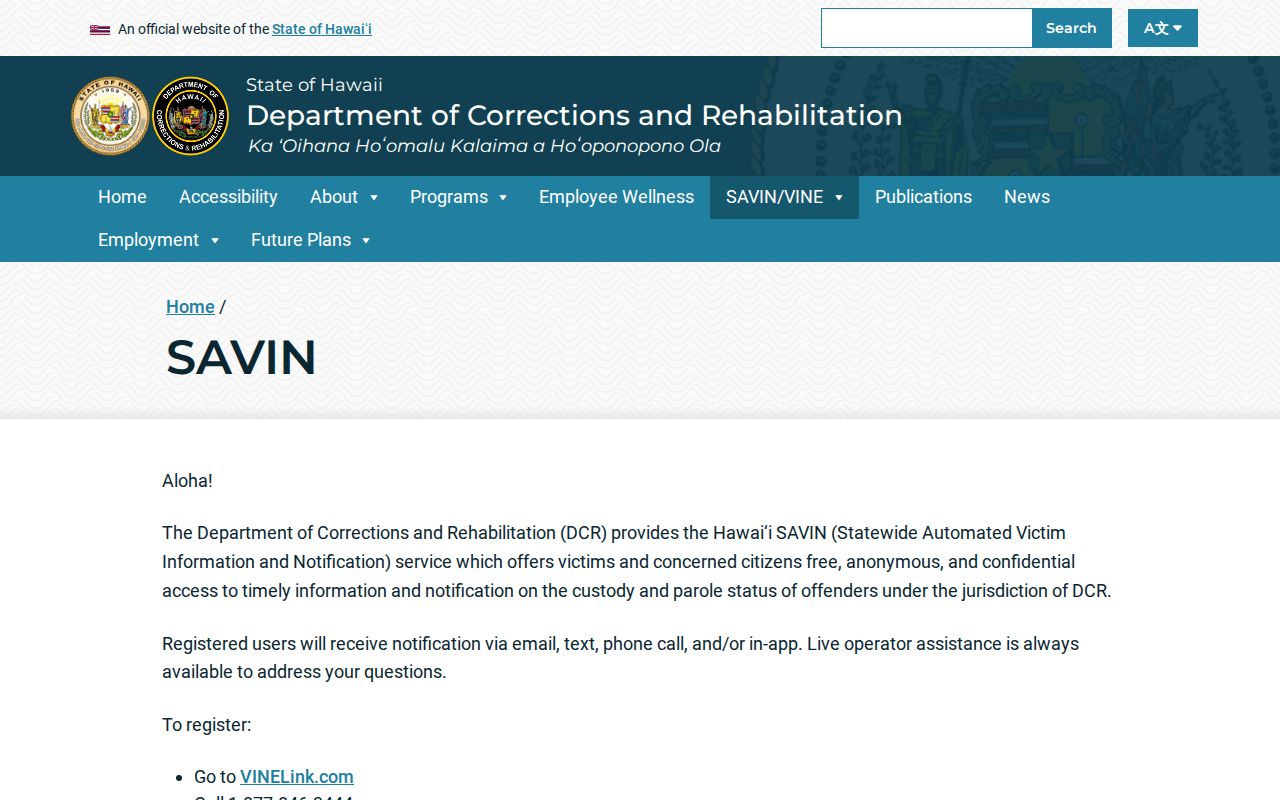
The state page is the right starting point for DCR status, but a live result should still be confirmed with the facility when release timing or destination matters.
DCR warns against relying on SAVIN alone. An alert can be delayed, and an empty or changed result can have more than one cause. Search again with an identifier, confirm the reporting agency, and call SAVIN or the facility when the interface conflicts with other official evidence.
Confirm a Kalawao Release Through MCCC
Maui Community Correctional Center is the defensible primary serving custody path for Kalawao, but it is in Wailuku and must not be called “Kalawao County Jail.” Hawaii operates community correctional centers as state jails. A Kalawao arrest and the later DCR custody record can therefore belong to different agencies.
The official MCCC page identifies the facility and its DCR role.
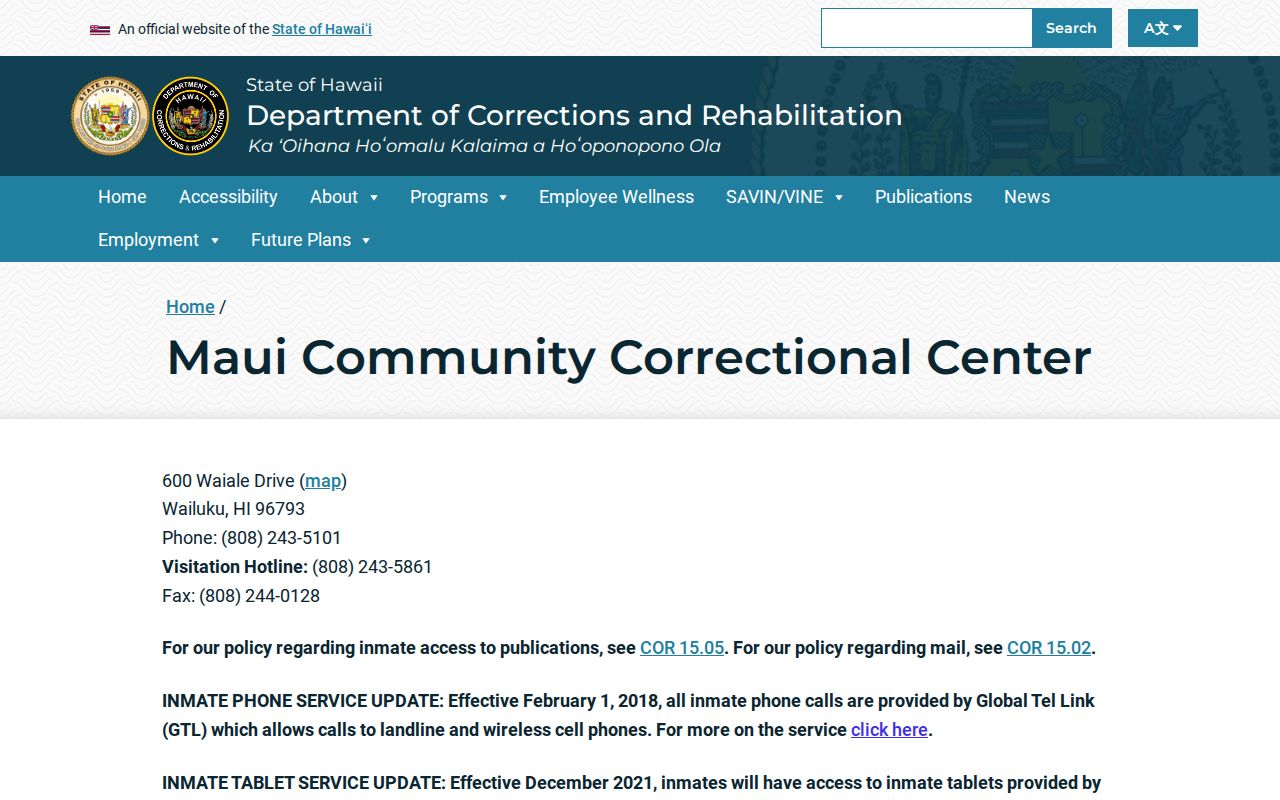
This facility source helps route the inquiry, but it does not publish a recent-release roster or prove that every Kalawao arrestee is booked there.
Ask a precise question: “Did MCCC release this person to the community, or did MCCC transfer custody?” A pretrial detainee may leave after bail, dismissal, a court order, or completion of a short sentence. A sentenced felon may transfer to prison. Another person may enter furlough or parole, and a hold can send the person to a different agency. Those events should not all be labeled as the same kind of release.
Kalawao Release or Continued Custody
A person who no longer appears under the same facility is not automatically free in the community. Absence may reflect transfer, spelling mismatch, data aging, a correction, or movement into another system. A court order may authorize release while staff still resolve identity, another case, a warrant, or an agency hold.
Community release
Look for a DCR status change plus facility confirmation that custody ended without transfer. Court authority helps explain why the departure was allowed.
Still held or transferred
Use the receiving agency's system when MCCC transferred the person to a prison, federal custodian, immigration detention, or another jurisdiction.
DCR's release procedure requires staff to verify the authority and identity, check for other charges and holds, and update Offendertrak immediately. SAVIN continuity is part of that workflow. “Immediate” is an agency duty, but it does not turn the public vendor interface into a certified, error-free daily ledger.
Why Kalawao Release Data Splits
Kalawao's distinctive data problem is jurisdictional. The Department of Health operational table identifies the Kalawao Sheriff and deputized officers, National Park Service law enforcement, and Maui mutual aid. DCR, not a county corrections department, operates the state custody system. The arresting authority may own the incident and transfer record, while MCCC or another facility owns the custody departure.
That split explains why a search can seem incomplete. Ask the arresting agency where custody went, ask DCR what happened to the custody episode, and use the court file for legal authority. If the live system has aged out or cannot resolve the event, use a written request directed to the agency that controls the missing fact. Do not treat an empty SAVIN result as proof of release.
Request a Kalawao Release Record
A focused request is the durable fallback when same-day tools do not settle the event. For DCR custody, identify the full name, known DCR or SAVIN number, approximate admission and release dates, and MCCC or the actual facility. Ask for releasable portions showing the effective release date and time, releasing facility, legal authority or category, destination category, and whether an agency hold prevented community release.
Use the Department of Law Enforcement UIPA page when DLE or its sheriff function created or maintains the relevant arrest, booking, or transfer record.
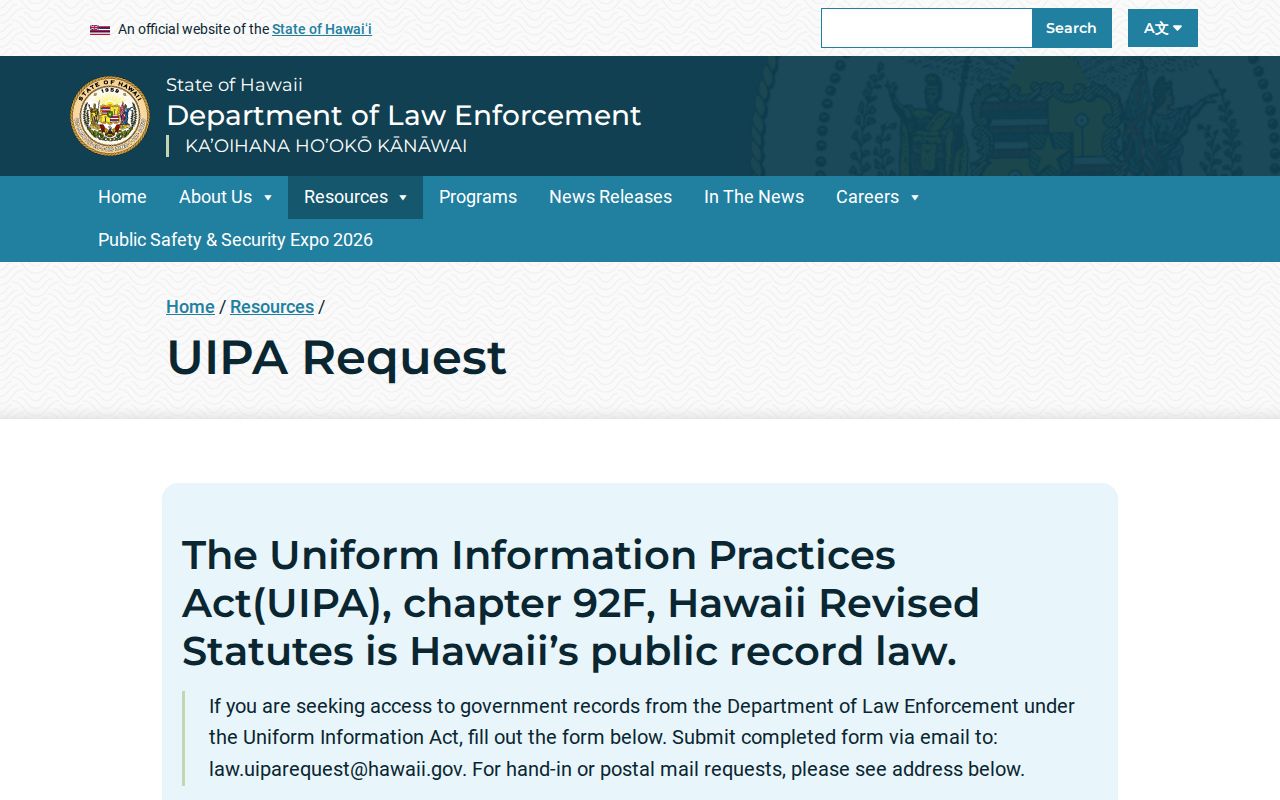
The request page provides the official channel; the record description should remain narrow and should invite redaction or segregation of protected material.
DOH's UIPA channel is more suitable for a record maintained through the administrative Kalawao Sheriff, while a National Park Service incident follows federal FOIA. A DCR request goes to DCR. The proper custodian may redirect a request if another agency owns the record. That referral is useful because it maps the custody chain.
Beyond Kalawao's 24-Hour Window
A check made one day later may miss a status label that changed again or a person who moved between systems. The Kalawao Jail Releases: 72 Hours page uses a three-day reconstruction method for weekend and multi-day events. It still does not offer a county feed, but it shows how to compare dated evidence across several days.
For an older event, place less weight on the live interface and more on the court docket and focused agency response. A permanent release history, photo archive, and projected-date field are not promised by Hawaiʻi SAVIN. Preserve uncertainty when sources disagree, and let each agency speak only to the fact it controls.