
FDC Honolulu Release Paths
Federal Detention Center, Honolulu is a BOP administrative-security detention center on Oʻahu. It belongs in the Kalawao custody map only when federal jurisdiction is established. National Park Service law enforcement works in Kalaupapa National Historical Park, but a ranger’s arrest does not prove federal charges, commitment to the U.S. Marshals Service, or placement at FDC Honolulu.
A person may leave FDC Honolulu because a federal court ordered release, the U.S. Marshals Service changed placement, BOP transferred the person to another institution, a sentence ended, or another authority accepted custody. Only some outcomes are community releases. The controlling federal docket and custodian record should be read together.
Confirm an FDC Release
The BOP Inmate Locator is the correct public starting point for BOP custody history. It covers federal inmates from 1982 to the present, subject to BOP’s limitations. A result can display a release date or wording such as “Released” or “Not in BOP custody.” That wording addresses BOP status only.
- Search the BOP locator by register number when it is known.
- Otherwise use the exact first and last name, then narrow by age, race, or sex fields shown by BOP.
- Compare the register number and identifying details before treating the result as a match.
- Read the location or release wording exactly as displayed.
- Check the federal docket for the legal order or sentence.
- Ask the U.S. Marshals Service about public placement routing in a pretrial case.
The official BOP locator displays federal custody and historical release results.
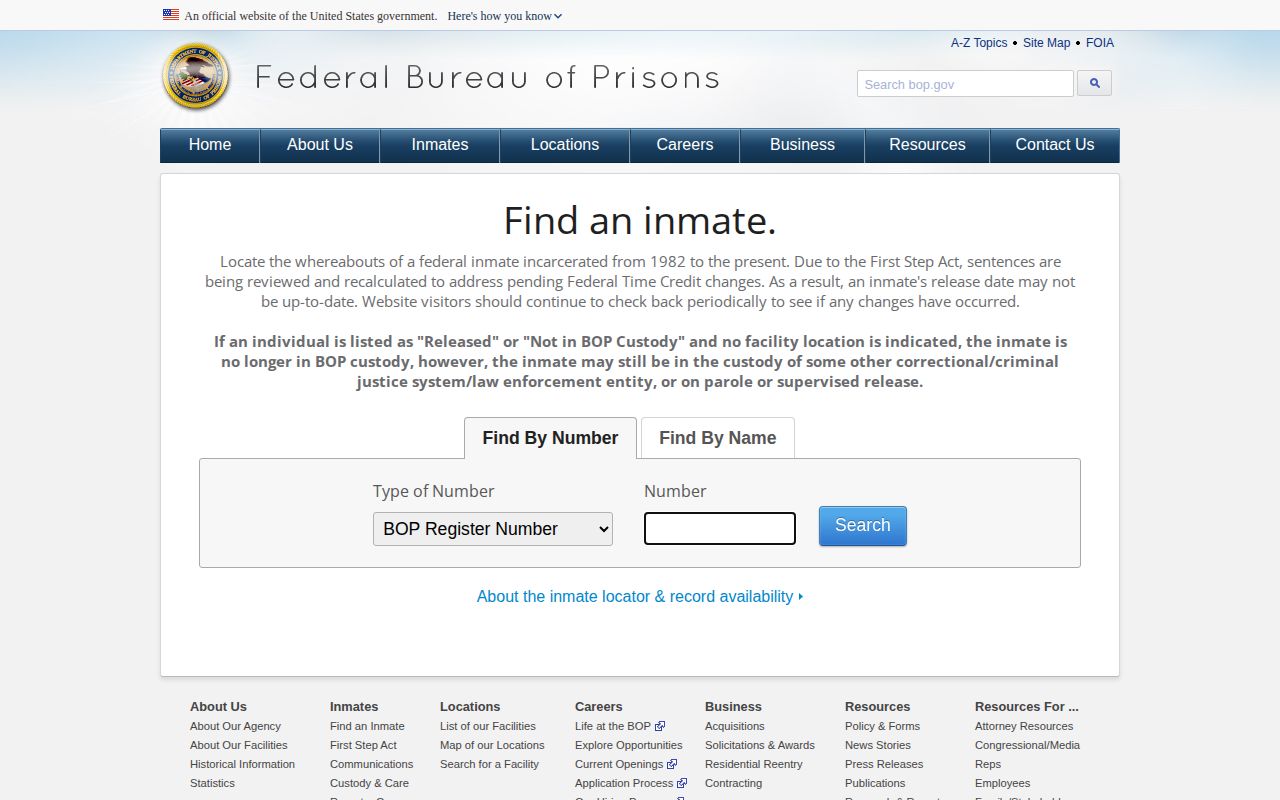
The federal screen cannot establish state or immigration custody after BOP involvement ends.
Released or Federally Transferred
A transfer ends FDC Honolulu’s physical possession but does not end federal confinement. The BOP locator may identify another institution. Pretrial defendants are often under U.S. Marshals Service responsibility even when housed at a BOP or contract location. A federal court release order can also be followed by another agency hold.
| Federal result | What it establishes | Next check |
|---|---|---|
| Current BOP institution | The person remains in BOP custody | Institution and federal docket |
| Released with date | BOP custody ended on the displayed date | Court conditions and any receiving agency |
| Not in BOP custody | BOP does not report current custody | USMS, court, state, or ICE as facts require |
| No result | No matching public BOP record was found | Identifiers, pretrial USMS path, and docket |
A BOP release date does not promise return to Kalawao. No Kalawao-specific federal release transportation arrangement was found.
FDC Records and Contact
Use the official institution page for current FDC Honolulu address, telephone, visiting information, and operational notices. The BOP locator FAQ explains the public record scope. Federal court records establish orders and docket events, while BOP controls its custody status.
Federal Detention Center, Honolulu
Federal Bureau of Prisons
Honolulu, Hawaii
Use the official institution page for current mailing, physical-address, and telephone details.
No address or hours beyond those verified in the Kalawao research should be invented. Facility contact does not guarantee disclosure about another person. For historical documentation, follow BOP’s federal records process or obtain the public federal court file.
Federal Release Record Evidence
A useful federal release record identifies the person by name and register number, states the facility or custodian, and shows the effective end of BOP custody. The related judgment, sentence, detention order, release order, or supervised-release condition belongs to the court record. Each document answers a narrower question.
| Source | Fact controlled |
|---|---|
| BOP locator or BOP response | BOP institution and reported release status |
| Federal court docket | Judicial detention, sentence, or release authority |
| U.S. Marshals Service | Pretrial federal custody and placement routing |
| Probation office | Federal supervised-release administration |
| ICE | Immigration detention, not BOP status |
Combine records rather than forcing one source to answer another agency’s question. Preserve the date searched and exact public wording.
Federal Supervised Release
Federal supervised release is a court-ordered period after imprisonment. It is not Hawaii state parole and is not controlled by the Hawaii Paroling Authority. The judgment and later federal docket entries establish its terms. The federal probation office handles supervision under the federal court.
A person on supervised release has left physical incarceration but remains subject to conditions. A violation allegation may produce a warrant, hearing, modification, or return to custody. Do not infer a current outcome from an old sentence or projected date. Check the newest court entry and the BOP result.
Immigration Holds After FDC
No Kalawao ICE contract facility was found. A federal release order can still be followed by immigration custody when lawful authority exists. BOP’s “released” wording does not answer whether ICE accepted the person.
Use the ICE Online Detainee Locator with the person’s A-number and country of birth, or with biographical details as the interface permits. ICE’s system covers its custody. It should not be used to infer a BOP release date, and BOP should not be used to infer ICE status.
Describe the event as release from BOP custody until community release is independently confirmed.
State and Federal Custody
A Kalawao arrest can remain a Hawaii matter. For state custody, use Hawaiʻi SAVIN, Maui Community Correctional Center, DCR, and the relevant Hawaii court file. For a federal case, use BOP, the federal court, and USMS. The presence of federal officers in Kalaupapa does not merge these systems.
If BOP shows no match, confirm the jurisdiction and identifiers before assuming release. A person might be in state custody, pretrial USMS custody not yet reflected as expected, immigration custody, another federal institution, or no longer held. The Kalawao County released inmate search lays out the full cross-agency decision path.
Older FDC Release Records
The BOP locator is useful for historical federal custody, but the public result is not the complete case file. Obtain the judgment and docket when the legal basis or supervision terms matter. Request BOP records when a durable custodian record is needed. A narrow request is easier to process than a demand for the entire correctional file.
Include the full legal name, register number, approximate admission and release dates, and FDC Honolulu as the possible facility. Ask for releasable records that show the effective end of BOP custody and whether the event was a transfer. Protected information may be redacted under federal law.
Verify FDC Honolulu Status
The sound sequence is jurisdiction, identity, BOP status, court authority, then any receiving custody. Use at least two identifiers. A common name alone is not enough. When a result conflicts with a court record, ask the source that owns the disputed fact.
- BOP custody
- Confinement or placement reported by the Federal Bureau of Prisons.
- USMS custody
- Federal detention and transport responsibility, often before sentence.
- Transfer
- A move between custodians, not a community release.
- Supervised release
- Federal court supervision after imprisonment.
- Detainer
- A request by another authority to hold or receive the person.
No single database proves freedom from every jurisdiction. Separate state, federal, and immigration checks preserve that limit.
Match Federal Release Results
Use a BOP register number whenever possible. A full name paired with age or another displayed identifier is the next best route. Common names can produce several results, and a photo should never be the sole basis for a match. Save the exact locator wording, institution, release date if shown, register number, and date searched. Those facts make it possible to compare the result with the federal docket.
If the court record and BOP result appear to conflict, identify which fact is actually different. A court may have authorized release while a hold delayed physical departure. BOP may have ended custody through a transfer. USMS may control pretrial placement even when the expected BOP result is absent. Contact the agency that owns the disputed event and avoid stating that the person returned to Kalawao unless a source supports that destination.